
Effective mediation requires more than knowing the law. It requires the ability to listen carefully, identify the interests underlying a dispute, communicate clearly, and help people move from entrenched positions toward practical solutions.
It takes special skill to navigate and buffer in high stakes disputes.
CANDACE LOVE WINDEL

Committed to Fair Proceedings, Balanced Interaction, and Livable Agreements.
Ms. Windel holds an M.A. in Communication as well as a J.D. in Law and teaches Mediation in a university graduate program, experiences that complement her legal training and elevate her approach to mediation.
Candace Love Windel brings substantial legal experience to her mediation practice in complex commercial and real estate matters, including construction and public-sector disputes.
Her understanding of how people communicate—particularly when they are under stress or in conflict—supports her ability to help parties engage in productive conversations and work toward meaningful resolution.
Her approach to mediation combines careful preparation, thoughtful listening, practical problem-solving, and an understanding of both the legal and human dimensions of a dispute. She seeks not simply to facilitate a conversation, but to help parties understand the issues, evaluate their options, and find a resolution they can live with.
She mediates in person, remotely, and in hybrid settings.
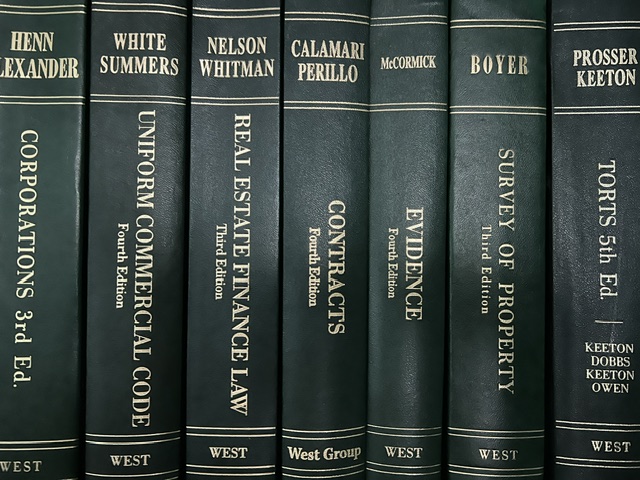
Whatever form of ADR
Ms. Windel can facilitate resolution.
FAQs
What is your philosophy as a mediator?
Mediation is seldom as simple as a simple as shoving everyone ‘half-way.’ The goal is always to find not so much a “middle” ground, but a reasonably shifted re-positioning that takes into consideration all issues, history, current situation, and rational goals of the parties at the table. Ms. Windel sees mediation as facilitated problem-solving that enables parties to emerge with increased mutual understanding, preserved and improved working relationships, and clarity of agreement to move forward productively.
How long does mediation take? And can we do it remotely without travel?
Mediation is usually a rather quickly moving process, at least compared to traditional court proceedings or complex arbitrations. The most time-consuming part is often scheduling the time for a mediation that works with all parties’ schedules. Contracts that call for mediation or mediation agreements between parties dictate the length of a given mediation. Typical lengths are half-day, full-day, or two-day mediations, depending on the subject matter. Mediation is increasingly conducted remotely by Zoom or a similar online meeting portal today so distance between parties seldom demands travel unless all the parties prefer face-to-face negotiations.
Is mediation binding or do I have other options if I don’t like the outcome?
Mediation is almost always non-binding. No one can force you into an agreement that you don’t want in mediation. If there is no acceptable resolution the eyes of both parties within a reasonable time frame, there almost always is an option for resolution of the issue either by arbitration or by filing or continuing a suit in the traditional court system. However, if you come to an agreement in mediation that is reduced to a written Settlement Agreement, you must understand that agreement is enforceable in a court of law in the same way a contract is.
What if we are contractually bound to arbitration, can we opt for mediation instead?
Terms of the contract dictate the method of resolution. Unless both parties agree in writing to mediate the matter either instead of arbitration or prior to arbitration, the contract terms apply. So if the contract says arbitration, you are limited to arbitration unless you come to a mutual agreement otherwise.